


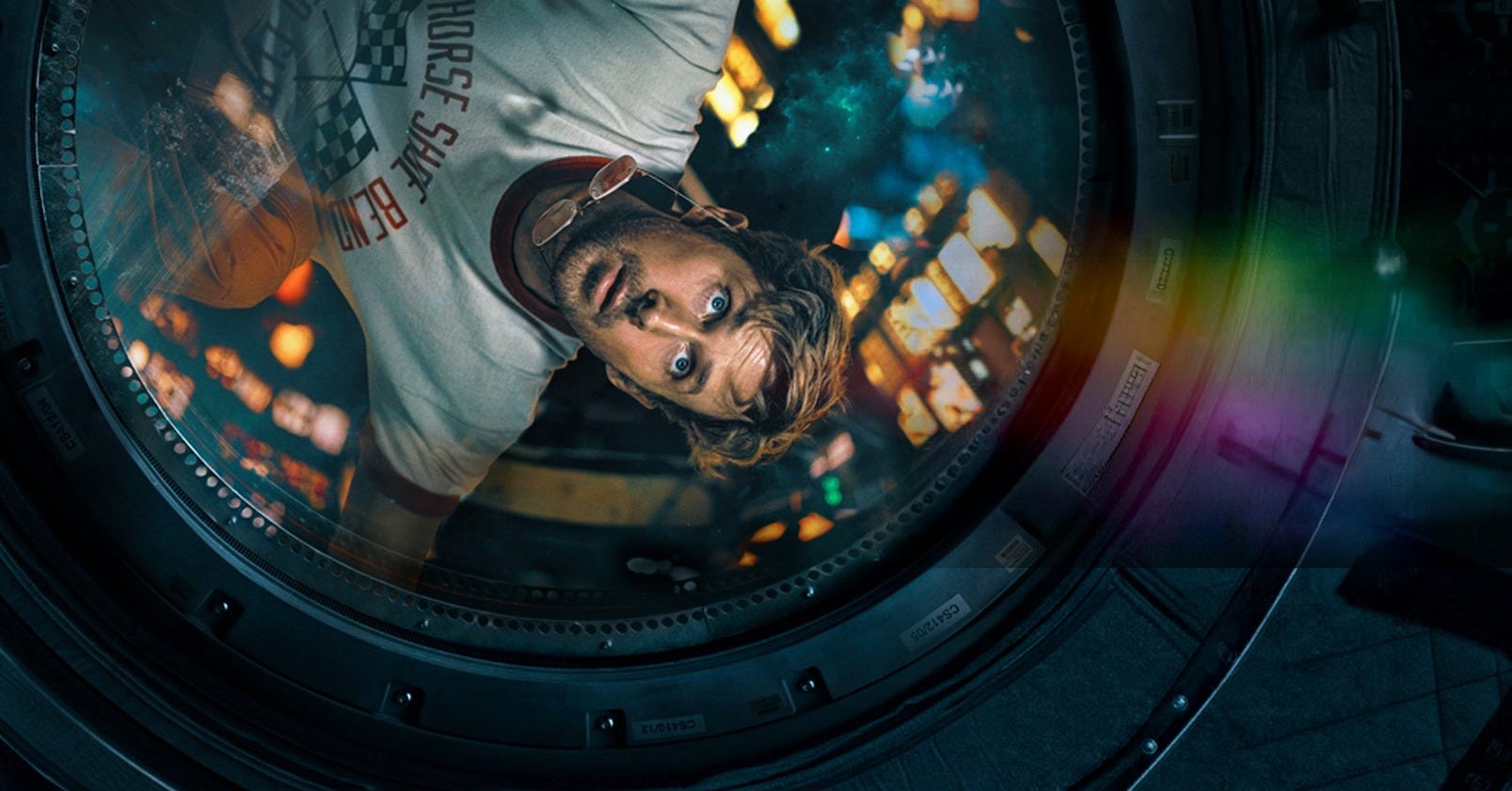
Project Hail Mary is a movie with a big heart and a small brain. It is winsome and inoffensive. I liked it, and more than that, I hated it.
The plot is simple: Ryan Gosling stars as Ryan Gosling Ryland Grace, a molecular biologist turned middle school teacher turned astronaut who wakes up aboard a spaceship with his memory missing. Gradually, he recalls that he’s the lone survivor of a mission to save the Earth after humans learn that alien microbes are eating the sun.
This is a rich premise which, taken seriously, could’ve been great. Show me a man grappling with loneliness, guilt, and despair! Awe me with distance! Enchant me with space! Make me feel anything at all!
But no—because of the movie’s insistence on being quippy, allergy to exploring any emotion that couldn’t be captured by an emoji, and fundamental misunderstanding of or disinterest in people and technology, instead we get 156 minutes of Ryan Gosling as market-tested likability-in-a-trenchcoat. It is a Marvel movie in spirit, if not IP. Nothing breathes; nothing lingers. The pace is relentless, the content vacuous and generic. If “No Other Choice” was “cargo cult satire,” here is “cargo cult sci-fi:” a film with the aesthetic trappings of the genre without any of the substance that makes it distinctive.
Watching this felt like scrolling Instagram: an unending procession of saccharine flashes that leave no room for reflection. Things keep happening. Between Gosling’s constant quipping and the heavy-handed score, I was never confused about how I was supposed to feel. But not for a second did I feel I was watching something real. I couldn’t bring myself to care about Gosling’s character, who is framed as both a goofy everyman and the world’s only expert in his niche, but has no discernible qualities beyond “normal; man-child.” Gosling is excellent as a twelve year old’s idea of smart.
The movie is terrified of sincerity, ambiguity, and discomfort—every sharp emotion must be undercut by a middling joke to lighten the mood. Notably, the only character permitted to be serious is a German woman. Events unfold in service of a perfunctory plot, with virtually every person and entity existing only as appendage to Gosling’s charm. There is no thought put into how a world where sun-eating microbes have arrived might affect people.
There’s a scene early on where, via flashback, we see Gosling reluctantly explain to a class of middle-schoolers the situation vis-a-vis the sun-eating microbes. One girl heard about this at home; apparently nobody else did. When Gosling explains, all the other kids’ minds are blown. But this movie takes place in the present day, in a world with social media and Youtube, and the public presumably already knew about the microbes! We’re supposed to accept that no other child heard about this until this fateful science class!?
It’s a small detail, but also an instance of a broader problem: the movie has no idea what to do about how advances in technology have changed the world since the 1980s, so it mostly ignores them, save for a few quips about social media. This creates a bizarre tension—what is ostensibly a work of science-fiction has already been outdated by reality. Most glaringly: we now live in a world with LLMs. Computers now speak to us fluidly, understanding grammar, humour, and subtlety, albeit imperfectly. But Project Hail Mary is uninterested, since in its world, the bounds of technology are set by nostalgia and borrowed bits from better, bolder movies.
And the alien—a sentient rock and lone survivor of his own expedition, who Gosling befriends when, partway through, the movie decides “forget Independence Day, we’re doing Arrival by way of ET”—he’s a cool guy, sure. But as with the robots, his character derives from the tired assumption that aliens will fail to understand grammar and humour, even while otherwise understanding the bulk of our concepts. Conveniently, Rocky has the exact sensibilities of the median American consumer, so this turns out not to matter. But I mourn the loss of curiosity and the lack of creative ambition.
If your work of science fiction does not arouse some measure of wonder, I think it has failed to fulfil its purpose. I watched this in a crowded theatre in Williamsburg, and the audience seemed to love it—from the beginning, almost every line got a laugh at the appropriate place. Certainly, I went in expecting too much: not Kubrick or Tarkovsky, but, at least, a portrayal of competence or human experience; something that respects its audience. This felt precision-engineered for mediocrity. Perfectly passable as kids’ entertainment.
We already live alongside digital minds (depending how you define the term). Pop culture, which has been stubbornly cannibalizing itself for decades, does not seem to get it. But we will be dragged into the future regardless. How long can we run on the fumes of nostalgia before our capacity to recognize human interiority and technological complexity begins to atrophy?
Tharin… go have a beer and chill. Sounds like you need to relax after this movie personally hurt you.